


Hamilton Club: Fire, History, and What Could Have Been Lost
- Visions

- Mar 18
- 3 min read
Written By: Johanna Foudy
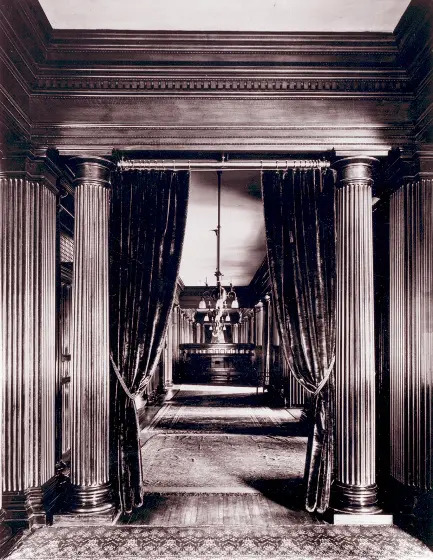
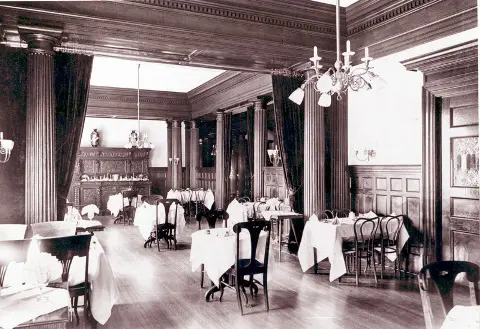
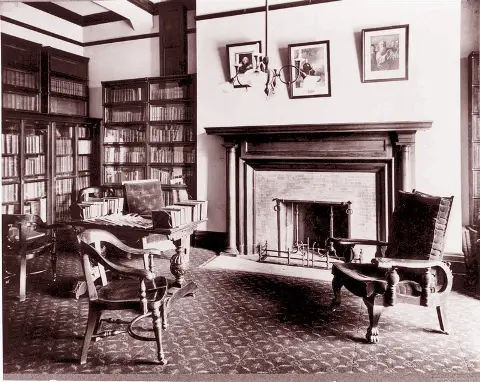
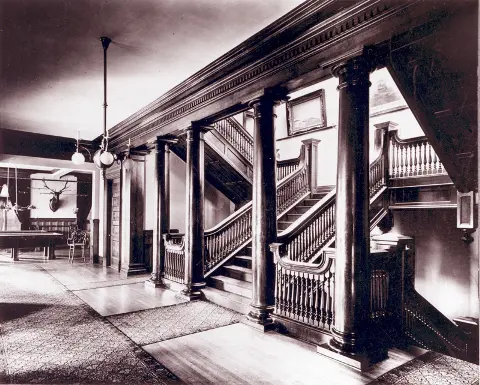
Image Credit: Hamilton Club - PCCC
The Hamilton Club, located at 32 Church Street in Paterson, is a focal point at Passaic County Community College.
Named after Alexander Hamilton, the building is described as an architectural gem and is filled with many works of art of historical and artistic significance.
The Fire
Over the summer, the Club experienced a bit of a tragedy in its basement. According to Cynthia Pagan, a staff assistant at the Hamilton Club, an electrical fire broke out in the Club's basement on Monday, June 30th, 2025.
At first, she was not given much information about what had happened. She recalls receiving correspondence from the now-retired head of maintenance, Brian Eagan, on July 1st, informing her of a power outage in the building.
She was told not to come on that day. She explains that she, “…heard through word of mouth that there was an electrical fire.”
The building was closed and remained closed until the end of this past winter break.
Art and Significance
Although the fire was said not to have caused significant damage, had it spread beyond the basement, it would have been catastrophic.
The Hamilton Club’s marble vestibule, grand staircases, original wainscoting, carved hand mantles, and beautiful original rooms make it an architectural gem. In addition to the building's architectural and historical importance, the paintings and sculptures collected over the years are historically significant.
Some of the most significant works of art include Albert Rosenthal’s Alexander Hamilton (1895) and Julian Walbridge Rix’s Landscape with Figures (Late 1800s).

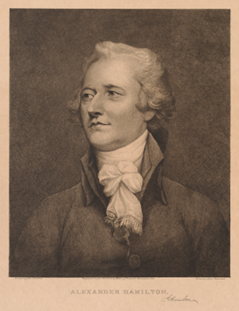

(Images Issued Through Creative Commons Licenses)
If the fire in the basement had spread further and gone uncontained, many of these pieces would have been damaged, either by the fire or the possible activation of the sprinkler system.
Susan Balik, Professor and Director of Cultural Affairs, explains and emphasizes the artwork's historical significance, stating, “Most of the paintings displayed in the parlor and throughout the Hamilton Club are from the 1800s, so preservation is our top priority.”
According to Professor Balik, the Hamilton Club has received several grants for restoration work over the years.
In the months following the fire, the Club consulted its conservator to ensure that none of the pieces were at risk of damage from temperature fluctuations in the building.
“We had a plan in place in case we needed to transport the artwork from the building to a climate-controlled facility. Fortunately, we did not have to do that.”
The Hamilton Club: A Brief History
The Hamilton Club first opened in 1897. Originally a gentlemen’s Club, it was a place where members would pursue recreational, social, and intellectual activities in a congenial setting. According to the Hamilton club information center, those who were members of the club “.... developed a sense of loyalty that would last for decades.”
The founder of the Club was Garret A. Hobart, a New Jersey native and Paterson attorney who later became the 24th Vice President of the United States under President William McKinley.
In 1902, the Club was destroyed by the Great Paterson Fire, but it was rebuilt and reopened the following year.
Over the years, the Hamilton Club has seen plenty of notable faces, including presidents Woodrow Wilson and Theodore Roosevelt, as well as William McKinley’s opponent, William Jennings Bryan.
Despite surviving the Great Paterson Fire and the Great Depression, the membership declined over the next 20 years.
In January of 1995, an agreement was made between the Club’s board of governors and the Passaic County Community College Trustees for the college to purchase the Hamilton Club’s art collection and furnishings.
Comments